The Emblem Need Not Explain Everything
A rugby club emblem need not tell its whole story. Learn how to choose a recognisable motif, weigh members’ connections and place deeper heritage elsewhere.

A rugby club emblem should make the club recognisable before it tries to explain its past. When choosing a rugby club emblem, begin with the story members most readily connect to the club, then decide which parts belong in other materials.
What should a rugby club emblem help people recognise?
Give the emblem a clear role: identify the club and express something of its character. A fixture card, clubhouse sign and supporter’s scarf are different objects, but each needs a mark people can associate with the same club.
That role is different from recording a complete history. A motif can point towards a place, tradition or shared memory without illustrating every detail behind it.
How can members identify a meaningful motif?
Ask players, volunteers and newer members what images or places they associate with the club, and why. Compare their answers for a shared connection rather than collecting symbols simply because each has a story.
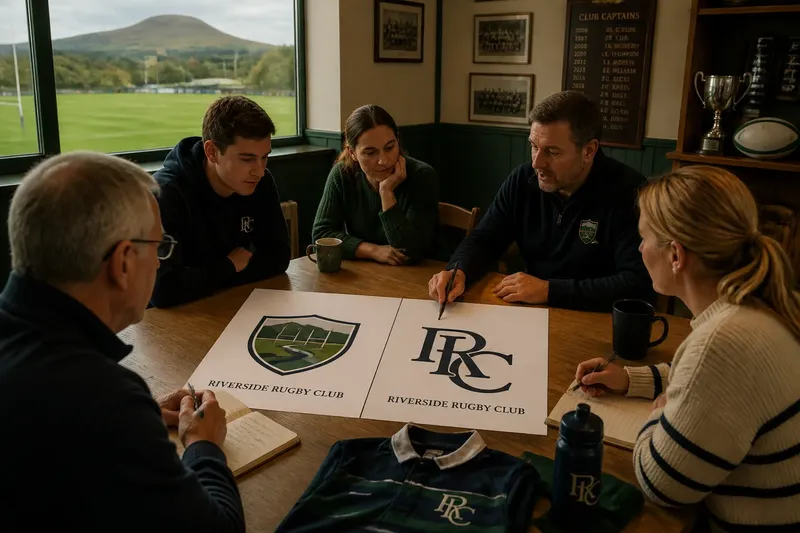
Say a club meets beside a river and members also value its welcoming junior section. Imagine its design group records both as important, then chooses the river’s curve as the emblem’s motif because members recognise it as part of the club’s home. The junior tradition can be described in welcome materials, where its people and history can be explained in context.
Which parts of the club’s past belong in the emblem?
Choose a motif that stands for a meaningful part of the club’s identity, rather than asking the mark to list its heritage. A local plant, a feature of the ground or a familiar club motif may work if members can explain the connection in their own words.
Imagine members are considering a pavilion, a ball, a founding symbol and a motto. They could write down what each represents, then agree that the pavilion is the strongest shared link to the club’s home. The resulting choice gives the emblem one clear subject; the other stories can be recorded in a history page or programme note.
Keep a short record of why the chosen motif matters and what the club has set aside. That makes the decision easier for future members to understand without turning the emblem into an illustrated archive.
How should the club decide what happens to each story?
Use this review to make an explicit choice for every proposed detail:
- Check whether members independently connect the motif with the club; if they do, consider it for the emblem, but if they do not, explain it in club materials or leave it out.
- Check whether the detail expresses the club’s chosen central story; if it does, keep it in consideration, but if it represents a separate story, give that story its own place.
- Check whether members can explain the detail’s meaning in plain language; if they can, record that explanation, but if they cannot, ask what evidence supports including it before making a decision.
- Check whether the story needs names, dates or personal context; if it does, tell it in a history page or programme note, but if it does not, consider whether a visual motif can represent it fairly.
- Check whether any borrowed or community symbol needs permission or informed advice; if it does, seek that permission or advice before approval, but if it does not, continue the club’s ordinary review.
- Check whether members disagree about the proposed symbol’s meaning; if they do, document the different views and consider a more widely recognised motif, but if they agree on its connection, record that shared interpretation.
Where can the fuller club story be told?
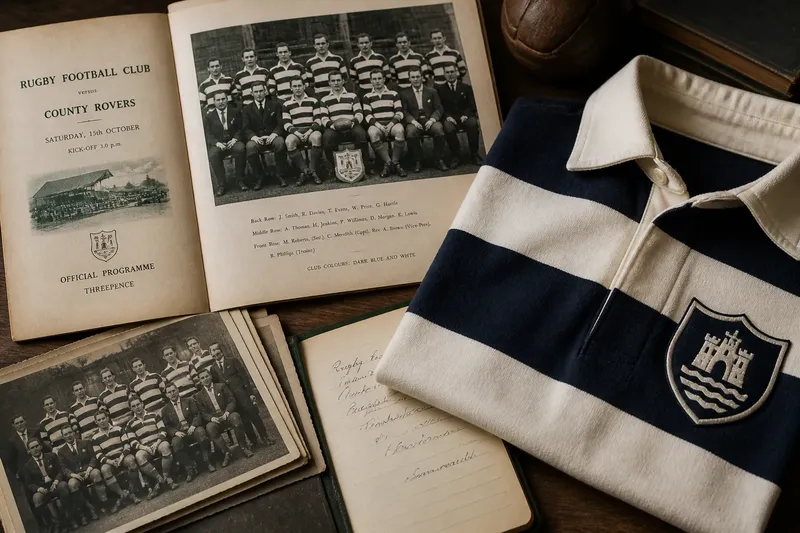
A club history page, welcome pack, match programme or clubhouse display can hold details that need names, photographs and context. Keep these materials recognisably connected to the emblem through a shared club name, colour palette or recurring motif.
If a symbol comes from another organisation or community, check permission and seek informed guidance where its meaning calls for it. A club committee can also consult relevant competition or manufacturer requirements before approving artwork for use.
What questions help settle a rugby club emblem?
Does a rugby club emblem have to include a ball?
No. A ball may signal the sport, but a club name, familiar colours or a locally meaningful motif may already identify the club. Include one only if members think it strengthens the emblem’s connection to the game.
Should the founding year appear in the emblem?
Include it if members regard it as part of the club’s identity and can explain why it belongs there. If the year mainly matters as historical information, place it in a club history or anniversary material instead.
Can a club retain an old-fashioned emblem?
Yes, if members still recognise it and consider it appropriate for the club’s current use. The club can review its form without treating a familiar design as something that must be replaced.
What if members disagree about the central symbol?
Ask each group to explain what its preferred symbol means, then compare those explanations with the emblem’s purpose. If no symbol represents the club fairly, choose a motif members can share and give the different histories space in club materials.
How can the club record its decision?
Write down the selected motif, its connection to the club and the stories reserved for other channels. For this rugby club emblem, that note gives future members a clear account of the decision without requiring the mark to carry the full history.
Keep the note with the approved artwork and revisit it if the club’s shared understanding changes. A useful record tells the next committee what the motif means and where to find the stories the emblem leaves untold.